Selected Film Reviews: Fantasy, Horror, and Sci-Fi
Click on the film title to read the full review.
For a complete chronology of film reviews, visit the Publications page.
“Philip K. Dick, Adjusted” (review of George Nolfi’s THE ADJUSTMENT BUREAU), Chicago Reader, March 10, 2011. “Read all these years later, [Philip K. Dick’s short story] “Adjustment Team” works not only as a crackerjack sci-fi tale and a mind-boggling lesson in causality but also as a tongue-in-cheek satire of 50s conformity. The hero may seem like a corporate cog, hustling to work and chafing against the restraints of office culture, but in fact he holds the fate of the world in his hands.“
“There’s Something Scary About Mary” (review of Jen and Sylvia Soska’s AMERICAN MARY), Chicago Reader, May 30, 2013. “Mary takes genuine pride in helping people realize their ideal selves, splitting people’s tongues and implanting horns in their foreheads, and this generosity of spirit makes her an anomaly of sorts among horror-movie surgeons. In the male tradition, they’re usually mad doctors imposing their wild dreams upon others.”
“Who’s Afraid of the Big Bad City?” (review of Christopher Nolan’s BATMAN BEGINS), Chicago Reader, June 17, 2005. “Christopher Nolan, director of psychological noirs like Memento and Insomnia, sold Warner Brothers on the idea of playing the story relatively straight and delving deeper into Batman’s origins as a child orphaned during a mugging. The film is too constrained by commercial demands to do anything really interesting with this idea, but by harping on the superhero’s tragic past it pinpoints the reason he’s stayed alive so long: the horror many Americans feel toward the modern city.”
“Uneasy Listening” (review of Peter Strickland’s BERBERIAN SOUND STUDIO), Chicago Reader, June 13, 2013. “In the whole history of horror and suspense drama, there’s never been a more promising line than ‘Did you hear that?’ Sound leaves too much to the imagination, which is where fear takes hold. As scores of radio writers learned in the 1930s and ’40s, banging out hit anthology programs like Suspense and Inner Sanctum Mystery, you could forgo the ghoulies and ghosties and long-legged beasties as long as you had things that went bump in the night.”
“Cheap Thrills” (review of Matt Reeves’ CLOVERFIELD), Chicago Reader, January 24, 2008. “Another antecedent here—and maybe a more important one than Blair Witch—is Orson Welles’s 1938 radio play The War of the Worlds, the first half of which simulated a news broadcast about spaceships descending on a small town. Welles exploited the intimacy and immediacy of a new medium to scare the pants off his audience; Abrams has updated the stunt for the YouTube age, trading on our insatiable appetite for eyewitness video.
“A Batman for the 21st Century” (review of Christopher Nolan’s THE DARK KNIGHT), Chicago Reader, July 17, 2008. “The Dark Knight achieves that unlikely alchemy when a piece of American pop culture looks deeply into the national psyche. Its moral dilemmas are perfectly fused with the amped-up action and outsize characters of a summer blockbuster, but they’re impossible to miss. Like all of us, the people of Gotham City have to protect themselves from evil without falling prey to it.”
“Authors of the Planet of the Apes” (review of Matt Reeves’ DAWN OF THE PLANET OF THE APES), Chicago Reader, July 17, 2014. “Screenwriters are the great unsung heroes of Hollywood. Without them there would be no story to tell, no movie to make, yet … if I rattled off the writers who’ve contributed over the years to the Planet of the Apes franchise, you’d probably draw a blank on all of them except Rod Serling—who was, of course, a TV personality, introducing his own and others’ stories on The Twilight Zone.”
“Truth in Doodling” (review of Don Hertzfeldt’s EVERYTHING WILL BE OK), Chicago Reader, February 9, 2007. “Since the 1920s, the sheer amount of labor required to do animation well has shaped the genre, pushing it toward family-friendly material that can sell tickets and cover payrolls. But when you like to draw pictures of people being sawed in half vertically, you have to rely on your own resources.”
“Fun With Fragments” (review of Guy Maddin’s THE GREEN FOG), Chicago Reader, April 26, 2018. “Acting on a commission from the San Francisco Film Society, the director pored over more than 100 dramas shot on location in the City by the Bay, snipping out the images he wanted and editing them into a new narrative loosely based on the greatest of them, Alfred Hitchcock’s Vertigo (1958). … Maddin has a jeweler’s eye for the screen moment; he extracts only the most potent images and kinetic movements, divorcing them from their original story lines and distilling them into moments of pure pleasure.”
“Sharp Teeth in a Dull Town” (review of Tomas Alfredson’s LET THE RIGHT ONE IN), Chicago Reader, November 20, 2008. “The architecture all has the same blocky postwar feel—dull, modern, and institutional, all clean lines and punishing right angles. … Eventually the visual tension between these orderly, geometrical spaces and the savagery lurking beyond them begins to drive the film, generating some of its most dramatic moments.
“Time Isn’t on My Side” (review of Ridley Scott’s THE MARTIAN), Chicago Reader, October 8, 2015. “God only knows what might go through [a person’s] head as he waits for days, leading into weeks, months, and years, to be rescued from the face of a strange world. … [Yet] being stranded on an alien planet doesn’t seem all that bad: [astronaut Mark] Watney is like a kid on summer vacation, playing around with his science projects, watching reruns of Happy Days on a flat-screen monitor, and recording a goofy video log for the folks back at NASA.”
“What Never Made It Onscreen” (review of Mark Romanek’s NEVER LET ME GO and Serge Bromberg and Ruzandra Medrea’s Henri Georges-Clouzot’s Inferno), Chicago Reader, September 23, 2010. “What blocks {Kazuo] Ishiguro’s [novel] from the screen is simple language, precisely chosen and delicately shaped, which creates a sensibility the movie’s talented actors can only approximate. In this subliterate age, when text messagers demote words to single letters, technical writers render instructions in pictographs, and popular novels read like glorified screenplays, you have to admire a story that defies visualization, that stakes its life on the written word.”
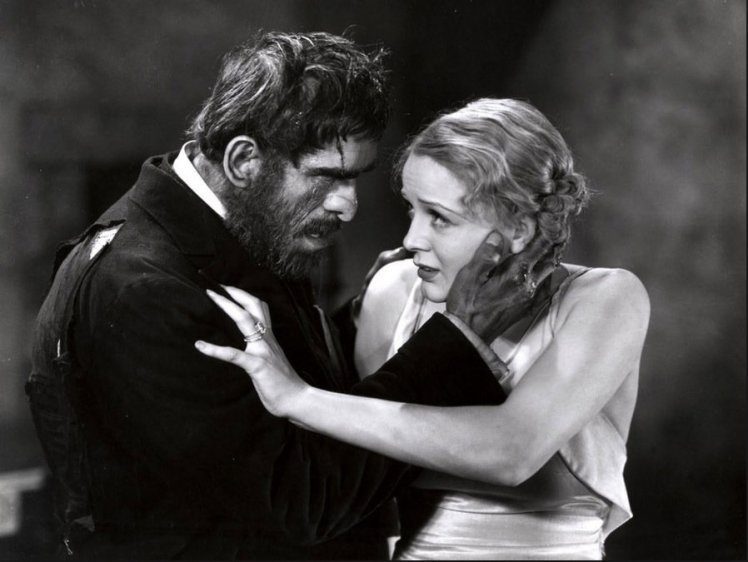
“Things That Go Hump in the Night” (review of James Whale’s THE OLD DARK HOUSE and Tod Browning’s THE UNKNOWN), Chicago Reader, October 26, 2017. “Whale and Browning were very different artists, the former known for his elegance and wit (in Bride of Frankenstein and The Invisible Man), the latter for his macabre, transgressive content (in a string of silent melodramas with Lon Chaney and later the notorious Freaks, all for MGM). Yet The Unknown and The Old Dark House share a fascination with repressed sexuality that speaks to their era and might explain why the horror genre has met with both popular success and moral condemnation.”
“A Fine Line” (review of Darren Lynn Bousman’s SAW II and Fruit Chan, Park Chan-wook and Takashi Miike’s THREE … EXTREMES), Chicago Reader, October 28, 2005. “[Saw‘s] most ridiculous moments are often the creepiest: the killer, nicknamed Jigsaw by the police, communicates with his victims through a closed-circuit TV broadcast of a giant Punch-and-Judy puppet, its pointed cheeks decorated with red spirals and its voice electronically disguised. In a fun house like this the elaborate tortures seem to leave behind the real world of pain and suffering for the realm of slapstick.”
“Mr. Lucas Goes to Washington” (review of George Lucas’ STAR WARS: EPISODE III — REVENGE OF THE SITH), Chicago Reader, May 20, 2005. “Lucas’s understanding of democracy and fascism is not exactly subtle, nor is his characterization of Anakin [Skywalker], but the two are so perfectly fused as part of an action plot that the movie plugs into the same mythological wall socket that powered the original [Star Wars].”
“That 70s Movie” (review of Damon Packard’s SPACEDISCO ONE), Chicago Reader, February 24, 2011. First Place, Best Arts Criticism, Association of Alternative Newsmedia, 2012. “Like many people in my profession, I spent way too many childhood hours sprawled in front of the tube, drinking in endless cop shows, sitcoms, and movies of the week as my mom implored me to go out and play. “You can watch that later,” she’d say. “It won’t be on later,” was my invariable reply. I couldn’t have been more wrong: just about every program I ever wasted my time on back then has been reissued on DVD, and with the advent of YouTube even the commercials are only a few keystrokes away. In the vast digital depository of American pop culture, everything—and I mean everything—will be on again later.”
Review of Craig Baldwin’s TRIBULATION 99: ALIEN ANOMALIES UNDER AMERICA), Chicago Reader, June 7, 2018. “Is America catching up to Craig Baldwin? Back in 1991, the San Francisco filmmaker took the underground cinema by storm with his collage narrative Tribulation 99: Alien Anomalies Under America, which repurposed footage from industrial films, educational films, cartoons, and low-budget sci-fi movies to present an alternate history of the 20th century in which humanity is secretly controlled by space aliens operating from a subterranean base at the south pole. A quarter century later, right-wing conspiracy theories circle the republic like hungry sharks.”
“So Bad It’s . . . Bad” (review of Claudio Fragasso’s TROLL 2 and Michael Paul Stephenson’s Best Worst Movie), Chicago Reader, July 29, 2010. “I’m relatively immune to the blandishments of midnight-movie fans claiming that some egregious turkey, be it The Apple or The Room or Xanadu or The Terror of Tiny Town or Plan 9 From Outer Space, is ‘so bad it’s good.‘ Life is short—given the choice, I’d rather watch something so good it’s good. I’ve yet to come across a movie so good it’s bad.”
“The Wolf Man Walks Again” (review of Joe Johnston’s THE WOLFMAN), Chicago Reader, February 18, 2010. “The werewolf myth has always provided a potent metaphor for addiction, and [Lon Chaney Jr.], an alcoholic, must’ve known what it felt like to wake up in the morning wondering what in God’s name he’d done the night before. … According to legend, Chaney Jr. once told a director, “Get everything you can out of me before 1 PM, because after that I can’t guarantee anything.”
 jrjones.online