
Selected Film Reviews: Comedy
Click on the film title to read the full review.
For a complete chronology of film reviews, visit the Publications page.
“Phileas, Grab Your Nunchucks” (review of Frank Coraci’s AROUND THE WORLD IN 80 DAYS), Chicago Reader, June 18, 2004. “Today [Around the World in Eighty Days] seems like the most prophetic thing [Jules] Verne ever wrote: at the beginning of the journey, Fogg is the ultimate Victorian gentleman, stubbornly ignoring the exotic scenery outside his train to focus on a perpetual game of whist, but by the end of the book his adventures have forced him to open himself up to the rest of the world.”
“Mumblecore and Something More” (review of Andrew Bujalski’s BEESWAX), Chicago Reader, February 4, 2010. “The larger problem for Bujalski isn’t the word [mumblecore] but what it’s come to represent: a myopic view of the world that both celebrates and panders to a small, disaffected, college-educated audience. Having defined a trend, he now has to worry about that trend defining him.”
“Funny Girls” (review of Paul Feig’s BRIDESMAIDS), Chicago Reader, May 12, 2011. “I’ve watched Bridesmaids with two different preview audiences, and as far as I could tell the gags connected equally well with the men and the women. Remarkably, the comedy comes from a genuinely female perspective, but its being female isn’t nearly as important as its being genuine.”
“Kings of Comedy” (review of Arthur Lubin’s BUCK PRIVATES and Dennis Dugan’s I NOW PRONOUNCE YOU CHUCK & LARRY), Chicago Reader, July 27, 2007. “Visually [Bud Abbott and Lou Costello] can’t compete with comic imagists like Keaton and Chaplin, but verbally they’re astonishing, with timing so sharp and rhythms so infectious that the routines seem to leap off the screen. … ‘Who’s on First’ is the best known of them, but they’re all of a piece, assaulting logic, grammar, or mathematics in a way that makes you wonder if anyone can really understand anything.
“Teacher’s Pests” (review of Mike Akel’s CHALK), Chicago Reader, May 25, 2007. “Mr. Lowrey is smart and committed but painfully shy and boring. He makes every classic teacher mistake: posing vague questions, asking students to read out loud with him, telling them he’ll operate one way and then doing the opposite. When his students rebel, he resorts to the hopeless disciplinary stunt of asking someone to take over the class, and in one excruciating scene, he tries to quell a classroom fight between two big girls by loftily invoking the preamble to the Constitution. The kids stare at him like he’s crazy.”
“Conan O’Brien Can’t Stop Bitching” (review of Rodman Flender’s CONAN O’BRIEN CAN’T STOP), Chicago Reader, June 23, 2011. “At least in the context of this tour, Conan O’Brien turns out to be a fairly unpleasant man, tense and self-obsessed, endlessly needling and browbeating his staff. Everyone laughs at the boss’s jokes, which are incessant to the point of irritation, but actual levity is in short supply.”
“The Fat, the Odd, and the Ugly” (review of Alex de la Iglesia’s EL CRIMEN FERPECTO), Chicago Reader, September 2, 2005. “Like any good maker of black comedy, Iglesia measures his humor in deviations from the norm. … El Crimen Ferpecto is Iglesia’s most interesting examination of human oddity yet, revisiting the theme with the fervor of [his debut feature] Mutant Action but expanding it into a satire of advertising and consumer culture—and all the while unreeling a tale of sex, lies, and homicide that recalls the classic noirs of the late 40s.”
“Rock in a Hard Place” (review of Frank Oz’s DEATH AT A FUNERAL), Chicago Reader, April 22, 2010. “Of the five movies [Chris Rock] has now produced as starring vehicles for himself, three have been remakes of movies that starred white actors…. Interspersed with these have been two sharp and incisive movies about the African-American experience…. As Rock zigzags from one category to the other, he seems to be reliving in a single career the same conflict that’s animated African-American theater for decades: whether to embrace the white European dramatic tradition or establish a new tradition that speaks to black social concerns.”
“The Man Who Would Be Dictator” (review of Armando Iannucci’s THE DEATH OF STALIN), Chicago Reader, March 15, 2018. “The portly Shakespearean actor Simon Russell Beale is one of only a few men to have played [Lavrenti Beria, Stalin’s first lieutenant and head of secret police] onscreen. After Khrushchev triumphed, Beria was tried for treason and executed, and his name was wiped from the Soviet history books. Very little was known about him in the West until the glasnost reforms of the 1990s began to open Soviet archives to historians, at which point the scale of his cruelty and sexual predation began to emerge.”
“Liars in Love” (review of Gary Hardwick’s DELIVER US FROM EVA and Donald Petrie’s HOW TO LOSE A GUY IN 10 DAYS), Chicago Reader, February 14, 2003. “Emerson wrote, ‘“’The only gift is a portion of thyself,’ but try that one out on Valentine’s Day and you’re liable to find thyself sleeping on the sofa. Even those of us who know better have been so beaten down by commercial culture that we feel compelled to spend a certain of amount of cash to prove our love—which makes tonight one of the biggest date nights of the year and February the perfect time to release a romantic comedy.”
“The Kids Are All Over” (review of Ken Scott’s DELIVERY MAN), Chicago Reader, November 28, 2013. “What a shame that Scott didn’t really tear this idea open and focus on [sperm donor] David and his little collective family. Things look good now, but what happens when the rest of his 533 children decide to look him up? What happens when they start asking for money, or get pissed off that he can’t attend all their college graduations the same weekend? What happens after his children start having children of their own, and David has a thousand christenings to attend?“
“The Nature of Nurture” (review of Yorgos Lanthimos’ DOGTOOTH and Lisa Cholodenko’s THE KIDS ARE ALL RIGHT), Chicago Reader, July 8, 2010. “Both movies are frontal assaults on the traditional nuclear family and comic meditations on how children are shaped (or misshaped) by their parents’ attitudes toward sexuality. But you might be surprised by what different routes they take to arrive at the same destination.“
“America’s Got Targets” (review of Bobcat Goldthwait’s GOD BLESS AMERICA), Chicago Reader, May 10, 2012. “Taxi Driver would never have entered the cultural firmament the way it has if people weren’t simultaneously horrified and gratified by Travis’s climactic bloodbath. God Bless America operates on the same principle but turns the carnage into slapstick, and because all laughter is involuntary you may wind up implicating yourself without even meaning to.”
“Wes Anderson Checks In to THE GRAND BUDAPEST HOTEL,” reviewed with Rithy Pahn’s The Missing Picture, Chicago Reader, March 13, 2014. “With each new feature his eccentric visual style becomes more pronounced even as his characters seem flatter and more cartoonish. Anderson’s movies can be wonderfully funny and fun to look at, but they often give me the feeling that I’m watching a grown man play with dolls.”
“This Is Between Me and Her” (review of Spike Jonze’s HER), Chicago Reader, February 6, 2014. “My own reaction to the movie was strongly subjective; it didn’t do much for me though it was well made and obviously would be a big zeitgeist favorite. With its story of a man giving in to digital solipsism, Her clearly captures the tenor of the times. But for me the ultimate test is whether a movie also transcends them.”
“Hey, His Brain’s Up Here” (review of Glen Ficarra and John Requa’s I LOVE YOU PHILIP MORRIS), Chicago Reader, December 9, 2010. “As comedy writers, Ficarra and Requa understand that the key to any joke is simplification. But there’s nothing simple about the mind of a confidence man, and in the process of converting Russell’s story into a laugh machine, the filmmakers emphatically reduce him to his sexual orientation.”
“Going Wide” (review of Chris Rock’s I THINK I LOVE MY WIFE), Chicago Reader, March 16, 2007. “[A] spirit of inclusiveness has helped Rock develop a large multiracial audience, just as his hero Richard Pryor did in the 70s. But as Pryor discovered the following decade, when his movie career was peaking, an artist who reaches too hard for the universal can easily lose track of himself.”
“A Grown-Ass Man” (review of Judd Apatow’s KNOCKED UP), Chicago Reader, June 1, 2007. “Apatow’s more personal projects—the cult TV series Freaks and Geeks and Undeclared, his sleeper hit The 40-Year-Old Virgin, and now the wonderful Knocked Up—have pulled away from the boys’ club of big gags and blatant stupidity, dealing honestly with lack of understanding between the sexes. In Apatow’s comedy boys and girls tend to view relationships as the gateway to adulthood, which leads to fears and disappointments as funny as they are painful.”
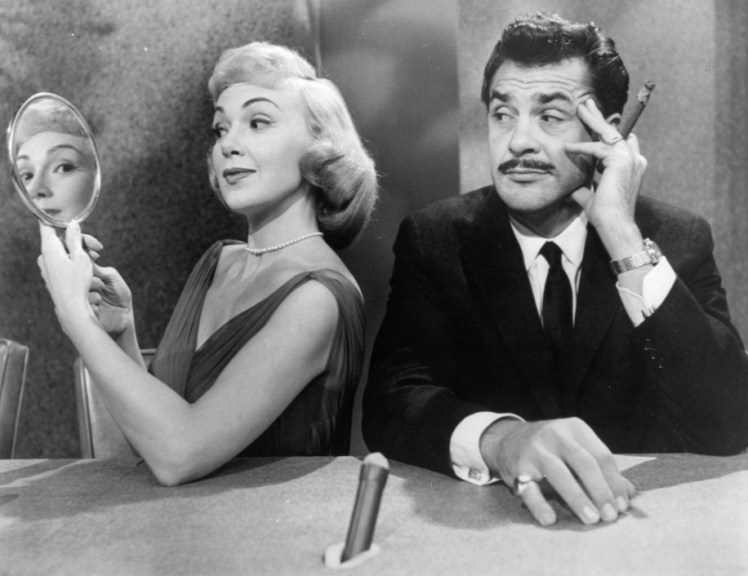
“The Tube’s First Concept Humorist” (review of The ERNIE KOVACS Collection), Chicago Reader, April 28, 2011. “Only later in his career, when he could command bigger budgets and the advent of videotape allowed him to record shows in advance, did Kovacs really begin to indulge his visual sense of humor. … Just as [Buster] Keaton used his early two-reelers and features to explore the illusions of the cinema … Kovacs seized on the optical tricks of the new video technology and mined them for every conceivable laugh.”
“Laurel and Hardy: Another Fine Match” (review of LAUREL & HARDY: The Essential Collection), Chicago Reader, December 8, 2011. “By any measure [the box set] represents a landmark of American film comedy, not to mention the product of an enviable creative partnership. In private life the two men blew through marriages at an astonishing rate—between them, they had eight wives—but professionally they worked together, with virtually no friction, for nearly 30 years. It was the longest nonfamilial relationship either one of them ever had.”
“Six Characters in Search of an Actor” (review of Todd Solondz’s LIFE DURING WARTIME), Chicago Reader, August 5, 2010. “Once the public embraces a character, and the performance takes on a life of its own in the popular imagination, the character is beyond the reach of the writer, the producer, the director, and even the actor. The people may not accept another actor in the role, or accept the actor in any role but this one; when that happens, the actor often discovers that the character controls him, not the other way around.”
“Sisters and Their Mister” (review of Jeff Baena’s THE LITTLE HOURS), Chicago Reader, July 13, 2017. “Baena deserves credit just for dipping into the Decameron, which opened Italian literature to a more tolerant view of human impulse and, notably, to women characters who were forceful, self-aware, and possessed of their own strong desires. … If [The Little Hours] seems mildly scandalous now, imagine what readers in 14th-century Florence must have thought of Boccaccio’s rutting nuns. The Decameron is full of women acting on their own physical needs, the church be damned.”
“The Penis Mightier” (review of Steven Soderbergh’s MAGIC MIKE XXL, Patrick Brice’s THE OVERNIGHT and Josh Lawson’s THE LITTLE DEATH), Chicago Reader, July 2, 2015. “Summer is here, a time for ice cream, beach frolics, and giant dicks bobbing gently in the breeze. This weekend you can take your pick of three randy new sex comedies. … Weirdly, the movies’ marketing and distribution parallel their respective attitudes toward sex—the farther each is from the American mainstream, the more private and distinctive its sex.”
“Laugh In the New Year With the MARX BROTHERS,” Chicago Reader, December 30, 2005. “In a world glutted with comedy programming the Marx Brothers’ best work is still astonishing for its velocity, aggression, and bursts of surrealism. … Their students are legion, but none could get his arms around the whole package: Mel Brooks captured their anarchy but never their sophistication, Woody Allen equaled their literacy but never their jubilance, and the Farrelly brothers, for all their taboo-smashing gusto, can’t compete with a fraternal unit that was consistently smart and smarter.”
“The MARX BROTHERS TV Collection Follows the Legendary Comedy Team Into the 1950s, 60s, and 70s,” Chicago Reader, September 22, 2014. “In some cases the brothers revive songs and routines that stretch back to their vaudeville days, completing a show business circle that began in 1905. In the end, though, the three discs are most significant as a record of two brilliant performers (Groucho and Harpo) trying to grow old gracefully, with varying degrees of success.”
“Lucas and Allen: Daydream Believers” (review of Woody Allen’s MIDNIGHT IN PARIS and Alexandre O. Philippe’s The People vs. George Lucas), Chicago Reader, May 26, 2011. First Place, Best Arts Criticism, Association of Alternative Newsmedia, 2012. “Allen may fancy himself a modern-day Bergman, but he’s always functioned best as a fantasy filmmaker. … Some of the funniest sequences in Annie Hall were the hero’s ridiculous reveries of grade school classmates updating him on their lives and Marshall McLuhan materializing in a theater lobby to help him win an argument.”
“MUPPETS and the Media Landscape” (review of “Sesame Street at 40”), Chicago Reader, November 11, 2010. “Sesame Street was radical for its time because, in contrast to the dry, classroom-bound programs of 60s public television, the new show would put across numbers and letters by exploiting the energy of commercial TV. The show’s nearest predecessor was CBS’s gentle Captain Kangaroo, but the creators were also enamored of ABC’s campy Batman, which appealed to both kids and hip adults, and NBC’s racy Laugh-In, with its wild mix of filmed skits and comic blackouts.”
“After Dawn” (review of Todd Solondz’s PALINDROMES), Chicago Reader, April 29, 2005. “Casting actors with real disabilities is nothing new, but collecting them into a horrendously tacky showbiz exercise can’t help bringing to mind Tod Browning’s 1932 circus story Freaks. I was a bit ashamed of myself for laughing–a combination of feelings that Solondz courts aggressively, though he avoids any taint of exploitation through his genuine tenderness toward the children.”
“You’re in 3-D Now, Charlie Brown” (review of Steve Martino’s THE PEANUTS MOVIE), November 12, 2015. “Last week The Peanuts Movie brought [Charles] Schulz’s cast of [comic strip] characters back to the big screen for the first time in 35 years, adding the modern technology of 3-D animation to give the characters physical depth. But emotional depth is another matter—this is a G-rated movie, and in America we try to protect children from not only sex and violence but also unhappiness.”
“When Giving Hurts” (review of Nicole Holofcener’s PLEASE GIVE), Chicago Reader, May 6, 2010. “Read a how-to book on screenwriting and the first principle you’ll learn is: Your protagonist wants something. How will he get what he wants? I’m guessing that few screenwriters have ever begun the process thinking, “My protagonist has something—how will he share it with others?”
“Mourning Edition” (review of Robert Altman’s A PRAIRIE HOME COMPANION), Chicago Reader, June 9, 2006. First place, Best Arts Criticism, Association of Alternative Newsmedia, 2007. “From the opening credit sequence, a landscape of a radio tower against deepening twilight, the movie is preoccupied with death—the death of radio, of regional culture, of one of the company members, and, one might conclude, of Altman himself.”
“So Funny You Could Cry” (review of Liam Lynch’s SARAH SILVERMAN: JESUS IS MAGIC), Chicago Reader, November 11, 2005. “Most comedians are like dogs, working hard to ingratiate themselves with the audience; Silverman is more feline, content with herself whether you laugh or not.”
“Some Bang, Some Whimper” (review of Lorene Scafaria’s SEEKING A FRIEND FOR THE END OF THE WORLD), Chicago Reader, June 28, 2012. “I’ll never forget the first time I saw Melancholia, Lars von Trier’s bleak drama about the end of the world. Two wealthy sisters, one depressive and the other well-adjusted, try to process the awful reality that a rogue planet is about to collide with the earth. … ‘You know,’ I thought, ‘this would make a great Steve Carell comedy.’”
“Fun With the Undead” (review of Edgar Wright’s SHAUN OF THE DEAD), Chicago Reader, September 24, 2004. “Night of the Living Dead has produced so many sequels, remakes, and rip-offs that a flat-out comedy may seem something of a last gasp, like the Abbott and Costello comedies that buried Universal Pictures’ classic horror cycles. Yet in its own snarky way, Shaun of the Dead comes remarkably close to the bitter satire that makes Romero’s zombie movies so distinctive.”
“Take-No-Shit Sherlock” (review of Guy Ritchie’s SHERLOCK HOLMES), Chicago Reader, December 31, 2009. “[Sherlock Holmes] became one of the great characters in genre fiction not because he was smart but because he was freakishly so. Cool and methodical, Holmes was the dark underbelly of Victorian rationalism, his intellect so overdeveloped that he could barely relate to anyone. … When the Allies searched Hitler’s bunker in 1945, the two film prints they found were both Sherlock Holmes adventures.”
“Meet John D’oh” (review of Joshua Michael Stern’s SWING VOTE), Chicago Reader, August 7, 2008. “Some [swing] voters are badly needed moderates in a political landscape so polarized the federal government barely functions. … But some of them are just ignorant clowns, more susceptible than most people to slick commercials, emotional appeals, and brazen distortions of fact. Such is the great paradox of electoral democracy: by the time the polls open, the voters with the most influence are those who deserve it the least.”
“Freedom Fighter” (review of Jason Reitman’s THANK YOU FOR SMOKING), Chicago Reader, March 24, 2006. “[Tobacco-industry spokesman Nick] Naylor is so good at what he does and so happy in his craft that you’re forced to give the devil his due. He doesn’t undergo any dark night of the soul or squishy redemption because there really is a guiding principle behind his chicanery: grown adults should be expected to take responsibility for their own actions.”
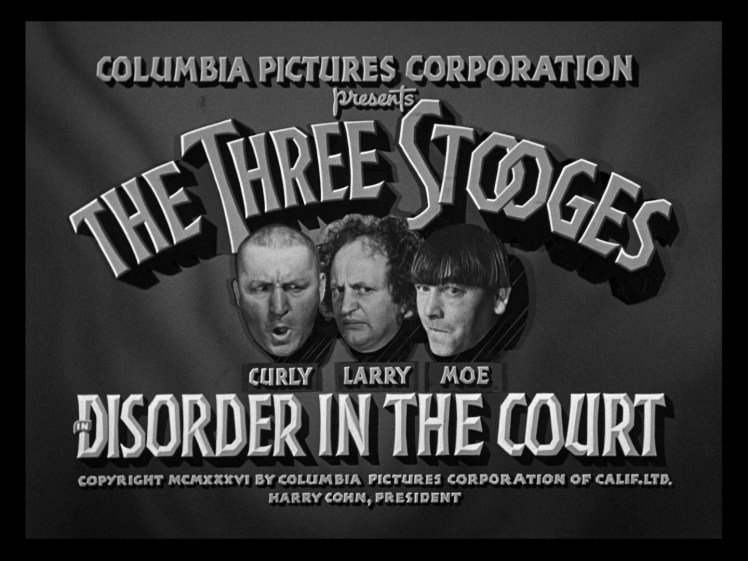
“Idiots Savants” (review of “THREE STOOGES ANNIVOISERY BLOWOUT”), Chicago Reader, July 2, 2004. “[The Three] Stooges remain the property of the unwashed masses, too loud, crude, and just plain stupid to be intellectualized like the Marx Brothers, Laurel and Hardy, and W.C. Fields were. They’re more popular now than any of those acts, and in their prime—from 1934, when they signed with Columbia, until about 1941—they were every bit as inspired. They fused the slapstick of the silent era with the outlandish sound effects of radio, focused on elaborate sight gags during an age of ceaseless dialogue, and were zealously committed to their Neanderthal worldview.”
“French Disconnection” (review of Julie Delpy and Marie Pillet’s 2 DAYS IN NEW YORK), Chicago Reader, August 16, 2012. “Sequels to blockbusters are crushingly commonplace, yet sequels to indie films are rare. When they come along, they usually exist for the right reason—not because the studio wants another gigantic payday but because the writer and/or director has more to say about the characters.”
“What’s Wrong With Up in the Air” (review of Jason Reitman’s UP IN THE AIR), Chicago Reader, December 15, 2009. “Perversely, as studios gave us less value their numbers improved from 2008: the recession has been great for box office because, even at $11 a ticket, a movie is still one of the cheapest nights out. So when good, smart people bite into Up in the Air and find out it’s a baloney sandwich, a fair number of them are going to be grateful it’s not a shit sandwich.”
“Hello Wackness My Old Friend” (review of Jonathan Levine’s THE WACKNESS), Chicago Reader, July 10, 2008. “Adolescence is a stage of life when your problems seem unique not only to you but to your moment in history; adulthood is the thudding realization that they’re not only universal but timeless.”
“Beverly Hills Cop-Out” (review of Larry Clark’s WASSUP ROCKERS), Chicago Reader, June 30, 2006. “When Clark made the transition [from photography] to movies he brought to the big screen [the] same realism and eye for character-defining detail, but the documentary element in his work has always mixed uneasily with the dramatic demands of commercial filmmaking. In Wassup Rockers the conflict is especially pronounced: the first half is a striking piece of photojournalism with little dramatic interest, and the second half is a highly contrived narrative that forfeits any claim to realism.”
“Truths About Lies” (review of Bobcat Goldthwait’s WORLD’S GREATEST DAD), Chicago Reader, September 3, 2009. “Perverse sexual adventures may figure prominently in Sleeping Dogs Lie and World’s Greatest Dad, but Goldthwait never goes for the easy laugh. What gives both movies their edge is his honest recognition of his characters’ needs, no matter how dark.”
“Everything’s Funnier with Weltanschauung” (review of Roy Andersson’s YOU, THE LIVING and Neal Brennan’s THE GOODS: LIVE HARD, SELL HARD), Chicago Reader, August 19, 2009. “Comedy demands a fixed perspective. … All the great pioneers of American movie comedy operated from deeply held personal beliefs: the humanism of Charlie Chaplin, the modernism of Buster Keaton, the anarchy of the Marx Brothers, and the misanthropy of W.C. Fields were like natural springs that never ran dry, creating a context that followed them from film to film. Perspective is what distinguishes real comic filmmakers like Woody Allen and Albert Brooks from the endless succession of sketch-comedy alumni who score a few times at the box office, then dry up and blow away.”
 jrjones.online